

Parenting doesn’t come with a manual—but having the right daily parenting systems can make it feel a whole lot more manageable. If you’re here, you’re likely looking for practical, realistic ways to simplify routines, support your child’s development, and feel more confident in your role every single day. This article is designed to do exactly that.
We break down proven strategies that support smoother mornings, calmer bedtimes, and stronger parent-child connections—without adding more to your already full plate. Every tip is grounded in child development principles and real-world parenting experience, so you can trust that the advice is both practical and backed by research.
Inside, you’ll find actionable guidance on building daily parenting systems that reduce stress, encourage positive behavior, and create more meaningful moments with your kids. Whether you’re navigating toddler tantrums or school-age challenges, these insights will help you build routines that actually work in real life.
From Chaos to Calm: A New Approach to Your Daily Routine
Ever feel like you’re sprinting from spilled milk to bedtime battles without catching your breath? Sound familiar? The daily grind of parenting can feel reactive and exhausting, but it doesn’t have to stay that way. So, what if small, intentional shifts changed everything?
First, anchor your mornings with simple daily parenting systems that reduce decision fatigue. Then, try:
- A two-minute reset before reacting
- Clear, consistent routines
- Connection before correction
These aren’t theories; they’re battle-tested in real homes. By the end, you’ll have tools to strengthen connection.
Mastering the Morning: How to Start the Day with Less Stress
Mornings don’t have to feel like a fire drill. With a few simple systems, you can trade chaos for calm.
1. Win the Night Before
Think of this as “future you” doing a favor for “morning you.” Lay out clothes (including socks), pack lunches, preload the coffee maker, and place backpacks by the door. These small resets reduce decision fatigue—the mental drain caused by too many choices early in the day (yes, it’s real; the American Medical Association has linked it to stress overload). Pro tip: set out your own outfit too. Kids notice when you’re scrambling.
2. Use Visual Schedules for Kids
A visual schedule is a simple picture chart showing steps like brush teeth, get dressed, eat breakfast. Kids process images faster than verbal reminders, which reduces nagging (and eye rolls). Post it at their eye level and let them check off each task. Predictability builds confidence.
3. Connection Before Correction
Spend five focused minutes snuggling or chatting. This fills their “connection cup” before demands begin. A child who feels seen is less likely to resist.
4. Beat the Clock with a Buffer
Plan to be ready 15 minutes early. If you need to leave at 8:00, aim for 7:45. That cushion absorbs spilled cereal and missing shoes.
These daily parenting systems turn rushed mornings into manageable routines.
Navigating Big Feelings: A Practical Guide to Meltdowns
First, validate the feeling—not the behavior. There’s a big difference. When your child screams because the block tower crashed, try: “I see you’re really angry the tower fell.” Then add a clear boundary: “I can’t let you hit.” In other words, emotions are welcome; hurting people isn’t. As child psychologist Dr. Daniel Siegel explains, “Name it to tame it” (Siegel & Bryson, The Whole-Brain Child). When kids feel understood, their nervous system begins to settle.
Next, create a calm-down corner. This isn’t a timeout spot (no one likes exile). Instead, think cozy and safe: a soft rug, a favorite stuffed animal, maybe a feelings chart. Say, “This is a place to help your body feel better.” Introduce it during a calm moment so it becomes part of your daily parenting systems, not a last-minute reaction.
However, the real magic is co-regulation. That simply means lending your calm to your child. Sit beside them and say, “Let’s breathe together.” Try box breathing: inhale four counts, hold four, exhale four, hold four. Or place a hand on your heart and say, “Feel it slow down.” Your steady presence teaches their body what calm feels like (Harvard Center on the Developing Child).
Finally, problem-solve after the storm. Ask, “What can we do if the tower falls again?” Maybe it’s rebuilding together or taking a break. As one mom told me, “Once we talk it through, he’s proud of fixing it.” And on smoother mornings, tools like 10 time saving morning routines for busy parents can reduce stress before it spills over.
Fostering Independence: The Secret to Raising Capable Kids
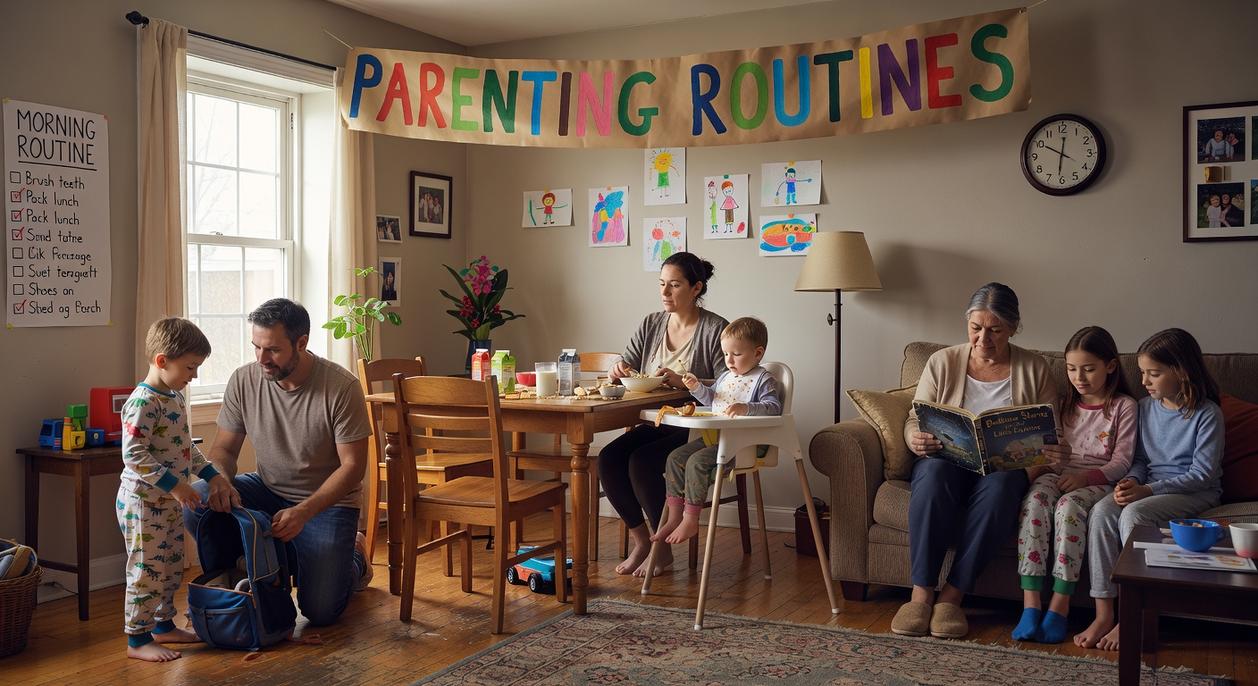
Independence isn’t built overnight; it’s taught in layers. One proven approach is the “I Do, We Do, You Do” method—a gradual release model backed by educational research (Pearson & Gallagher, 1983).
- I Do: You model the task (tying shoes, packing lunch).
- We Do: You guide while your child participates.
- You Do: They try independently while you step back.
Because skills stick best through practice, this step-down method increases confidence and competence over time.
Equally important, assign age-appropriate responsibilities. The American Academy of Pediatrics notes that chores build self-esteem and resilience. Consider:
- Toddlers: Put toys in a bin, throw diapers away.
- Preschoolers: Set napkins on the table, water plants.
- School-age: Pack backpacks, load the dishwasher.
Notably, “helpful” beats “perfect.” Research from Stanford shows praising effort over outcome fosters a growth mindset (Dweck, 2006). A crookedly made bed still builds capability.
Meanwhile, offering simple choices—“red cup or blue cup?”—supports autonomy and reduces power struggles (Self-Determination Theory; Deci & Ryan, 2000). Controlled choices feel empowering, not overwhelming.
When woven into daily parenting systems, these small steps compound. Over time, capable kids aren’t born—they’re gradually, intentionally raised.
The Bedtime Wind-Down: Crafting a Peaceful Evening Routine
The Importance of Consistency
Kids thrive on patterns. A predictable sequence—bath, pajamas, teeth, story—acts as a neurological cue, training the brain to associate steps with sleep. This is called a behavioral sleep association, meaning repeated actions signal what comes next. Research from the American Academy of Pediatrics shows consistent routines improve sleep quality and emotional regulation. Some parents argue spontaneity keeps evenings fun. Sure—but at 8:37 p.m., “fun” often looks like a second wind (and no one asked for that). Consistency is calming, not boring.
The “Screen-Free Hour”
Contrary to popular belief, quiet cartoons aren’t harmless wind-down tools. Blue light suppresses melatonin—the hormone that regulates sleep—delaying drowsiness (Harvard Health). Turn screens off 60 minutes before bed. Try puzzles, coloring, or audiobooks instead.
One-on-One “Bedtime Chat”
Spend five minutes asking their favorite part of the day—or any worries. This simple ritual strengthens connection and fits beautifully into daily parenting systems. (Pro tip: Keep it short so it feels safe, not interrogative.)
Effective parenting isn’t built on grand gestures; it’s shaped by small, steady choices you make every day. If you’re overwhelmed, juggling tantrums, to-do lists, and sleepless nights, you’re not alone. The chaos often fades when you lean into simple daily parenting systems that create rhythm and predictability. For example, a consistent bedtime routine reduces power struggles, while naming your child’s feelings builds trust. Meanwhile, encouraging small acts of independence—like packing their backpack—boosts confidence. Start small: choose one strategy, practice it for a week, and notice the shift toward a calmer, more connected home. Progress beats perfection, always. Trust.
Create Calmer, More Confident Days at Home
You came here looking for practical ways to make parenting feel less overwhelming and more manageable. Now you have clear, realistic strategies you can start using right away.
The truth is, the stress doesn’t usually come from one big moment. It builds up in the small, daily chaos—missed routines, power struggles, constant reminders, and never-ending to-do lists. That’s where simple, consistent daily parenting systems make all the difference.
When you create repeatable rhythms for mornings, meals, transitions, and bedtime, you reduce decision fatigue, minimize meltdowns, and give your child the structure they crave. And just as importantly, you give yourself breathing room.
If you’re tired of feeling reactive and drained, it’s time to put supportive systems in place. Thousands of moms are already transforming their homes with proven, real-world strategies that actually work.
Start building your own daily parenting systems today and take back control of your routine. Your calmer, more confident mom life starts with one small change—make it now.

 Calviner Brownder writes the kind of child development insights content that people actually send to each other. Not because it's flashy or controversial, but because it's the sort of thing where you read it and immediately think of three people who need to see it. Calviner has a talent for identifying the questions that a lot of people have but haven't quite figured out how to articulate yet — and then answering them properly.
They covers a lot of ground: Child Development Insights, Real-World Parenting Tips, Momlife Wellness Practices, and plenty of adjacent territory that doesn't always get treated with the same seriousness. The consistency across all of it is a certain kind of respect for the reader. Calviner doesn't assume people are stupid, and they doesn't assume they know everything either. They writes for someone who is genuinely trying to figure something out — because that's usually who's actually reading. That assumption shapes everything from how they structures an explanation to how much background they includes before getting to the point.
Beyond the practical stuff, there's something in Calviner's writing that reflects a real investment in the subject — not performed enthusiasm, but the kind of sustained interest that produces insight over time. They has been paying attention to child development insights long enough that they notices things a more casual observer would miss. That depth shows up in the work in ways that are hard to fake.
Calviner Brownder writes the kind of child development insights content that people actually send to each other. Not because it's flashy or controversial, but because it's the sort of thing where you read it and immediately think of three people who need to see it. Calviner has a talent for identifying the questions that a lot of people have but haven't quite figured out how to articulate yet — and then answering them properly.
They covers a lot of ground: Child Development Insights, Real-World Parenting Tips, Momlife Wellness Practices, and plenty of adjacent territory that doesn't always get treated with the same seriousness. The consistency across all of it is a certain kind of respect for the reader. Calviner doesn't assume people are stupid, and they doesn't assume they know everything either. They writes for someone who is genuinely trying to figure something out — because that's usually who's actually reading. That assumption shapes everything from how they structures an explanation to how much background they includes before getting to the point.
Beyond the practical stuff, there's something in Calviner's writing that reflects a real investment in the subject — not performed enthusiasm, but the kind of sustained interest that produces insight over time. They has been paying attention to child development insights long enough that they notices things a more casual observer would miss. That depth shows up in the work in ways that are hard to fake.