

Ever felt like you’re drowning in the chaos of parenthood? I get it. You give everything to your kids, and , you’re ‘touched out’ and running on empty.
It’s the constant push and pull between being a present parent and caring for yourself. It’s a battle, isn’t it? We hear “put on your own oxygen mask first,” but how on earth do you manage that when you’re already knee-deep in responsibility?
Here’s the deal. You don’t need another task on your to-do list. This isn’t about more work.
It’s about finding the self-care parenting balance that’s already within reach. Trust me, it’s there. This isn’t just theory.
It’s practical wisdom from people (like you and me) who’ve been through it. In this article, you’ll find a guilt-free approach to creating harmony in your busy life.
Harmony Over Balance: A Parenting Reality Check
Let’s get straight to it. The idea that parents can achieve perfect “balance” is a trap. We hear it all the time.
Balance your work, your kids, your life. But balance implies a delicate 50/50 split that’s not just unrealistic, it’s impossible. You’re not a tightrope walker, constantly at risk of falling.
You’re a whole person trying to get through a messy, beautiful life.
Harmony, on the other hand, is the real deal. It’s not about slicing your time like a pie. It’s about creating a rhythm where self-regulation and care flow naturally into family life. Think of it as a melody where different notes like parenting, self, and work blend together. A beautiful melody doesn’t rely on perfect timing for every note. It thrives on the way those notes interact and complement each other.
You might be asking, isn’t letting go of this “balance” myth just admitting defeat? No, it’s about releasing yourself from the guilt of not meeting an impossible standard. By embracing harmony, you step into a more sustainable peace.
And let’s be honest, isn’t that what we’re all chasing?
If you’re looking for practical ways to integrate this mindset, check out some mindfulness techniques busy moms can use. It’s a game-changer. Because self-care parenting balance is not about juggling, it’s about flowing.
Embrace the imperfections. It’s the first real step toward a fulfilling life.
Ditching the Guilt: Redefining Self-Care
Let’s face it. The Instagram version of self-care is a joke. Spa days, weekend getaways, and hour-long yoga sessions?
Who has time for that? Not me, and probably not you either. These ideals can feel more like a burden than a relief, piling on stress and guilt when we can’t fit them in.
Here’s the thing: self-care doesn’t have to be grand. It’s about any intentional action you take for your well-being. It can be as simple as taking 30 seconds for yourself.
Last week, in the chaos of a toddler meltdown, I paused to take three deep breaths. It was a small moment, but it helped me reset. That’s real self-care.
Or consider this: drink a glass of water before diving into your day. Step outside for a minute of fresh air after a heated conversation. These are small acts, but they matter.
They’re achievable. We need to redefine what self-care means in the context of self-care parenting balance.
Pro tip: find tiny moments and claim them. It’s not about escaping life. It’s about living it better.
You deserve that.
Practical Harmony: 5-Minute Resets for Hectic Days
Feeling overwhelmed? You’re not alone. Here’s my take on quick, actionable resets that fit right into our busy lives.
The Sensory Reset
Ever tried a sensory reset? Smell a calming important oil. It’s like magic for your nerves.
Or sip a warm drink. Feel the mug in your hands, the liquid sliding down your throat. It’s grounding, isn’t it?
The ‘Brain Dump’ Note
Got a million thoughts buzzing? Do a brain dump. Take a pen and write everything down.
Get your worries and tasks out of your head and onto paper. You’ll clear the mental clutter faster than you think. It’s cathartic.
Mindful Transitioning
Transitioning between roles is hard. Ever paused in your car after a school run? Or before stepping into the chaos of home after work?
Take two minutes. Breathe deeply. This helps you shift gears and be more present.
Trust me, it makes a difference.
The Body Scan Stretch
Waiting for the microwave or a pot to boil? Do a quick body scan stretch. Focus on your neck, shoulders, and back.
Feel the tension melt away. Those three-minute stretches are lifesavers. Seriously, our bodies (and minds) will thank us.
Remember, these small acts can create a self-care parenting balance. By the way, consider creating a relaxing sleep environment. It’s another solid step in nurturing yourself amidst life’s chaos.
Being a parent is hectic, no doubt. But these resets? They’re game changers.
Test them out. You might just find your days a little calmer.
Self-Care Fusion: Parenting with Balance
We all know self-care is key, but who has the time when you’re juggling a family? I’ll tell you what (habit) stacking is a game-changer. It’s about weaving these moments into the chaos already in motion.
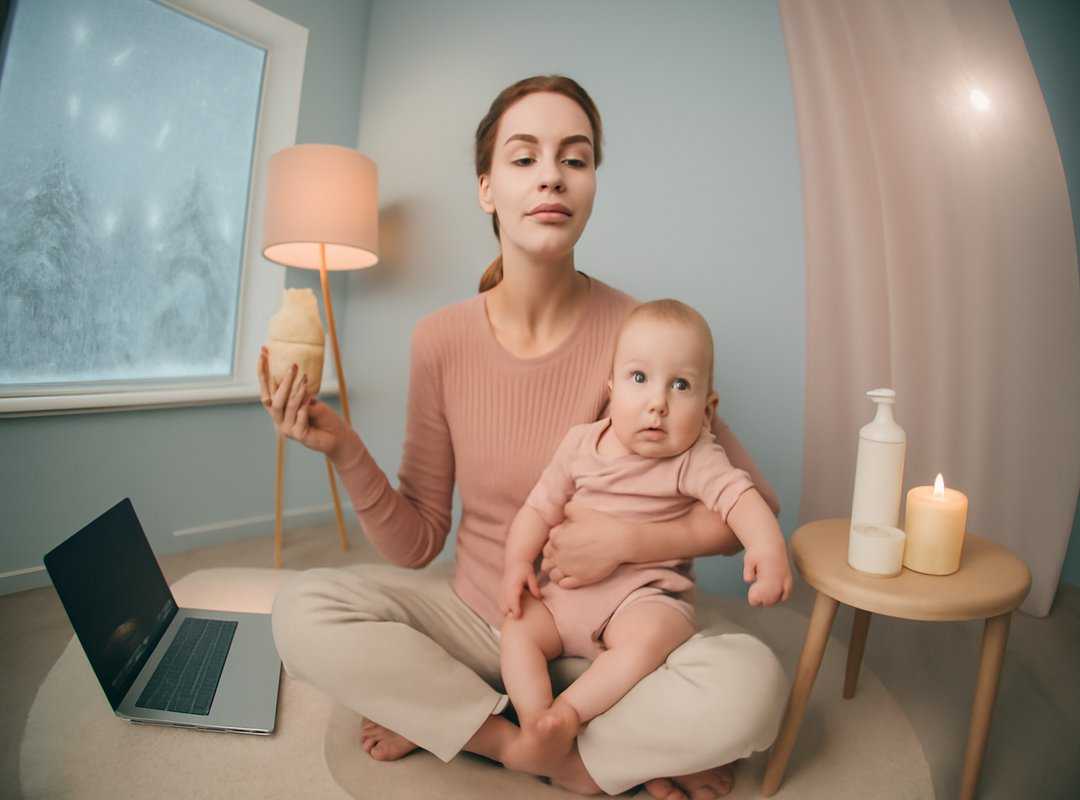
Morning routine. Picture this. You’re making breakfast for the kids. Let’s be real, they’re probably bickering about cereal. So why not pop in some earbuds and play a favorite uplifting song or a 5-minute podcast episode just for you? These small joys go a long way.
Let’s move to playtime. Don’t just watch. Get down on the floor, do some simple stretches.
Call it “animal yoga.” I mean, who doesn’t want to roar like a lion while stretching? This way, you’re getting a bit of movement in and having fun with your kid.
Now, the naptime/quiet time conundrum (tempting) to dive into chores, isn’t it? Resist. Dedicate the first 10 minutes to something genuinely restorative (yes, even just sitting in blissful silence counts).
You deserve this pause.
Finally, there’s the bedtime routine. After tucking them in, it’s your turn for calm. Try a 5-minute guided meditation using an app.
It’s soothing before you dive into the post-bedtime grind of cleaning up or binge-watching TV.
Are you wondering, “Is this realistic?” Absolutely. The goal here is creating a self-care parenting balance. It’s about fitting tiny sweet spots into daily chaos.
So, next time you’re knee-deep in kid stuff, remember (small) changes make a big difference.
The Ripple Effect: A Calmer You Means a Calmer Family
Self-care isn’t selfish. It’s important. When you’re calm, your kids feel it too.
This is what we call co-regulation. Ever noticed how a stressed parent equals a stressed child? It’s no accident.
By modeling self-care, you’re teaching your children about emotional health. It’s not just about you. It’s a tool for parenting.
When you find that self-care parenting balance, you’re not just managing your stress. You’re showing your kids a lifelong skill. Kids watch us more than we realize.
They learn how to handle their own emotions by watching how we handle ours.
Find Your Balance in the Everyday
Exhaustion is real when you’re trying to pour from an empty cup. We can’t keep going like this. But here’s the kicker: true self-care parenting balance isn’t about grand gestures.
It’s about those small, intentional moments woven into everyday life. They’re realistic. Flexible.
Guilt-free.
So, what now? Choose just one five-minute reset from this list to try today. Notice how it feels.
This small step is a solid act of love for both you and your family. Take action. You deserve it.
And remember, it works. Because yes, balance is possible, and it’s closer than you think.

 Norvain Vornhaven writes the kind of child development insights content that people actually send to each other. Not because it's flashy or controversial, but because it's the sort of thing where you read it and immediately think of three people who need to see it. Norvain has a talent for identifying the questions that a lot of people have but haven't quite figured out how to articulate yet — and then answering them properly.
They covers a lot of ground: Child Development Insights, Real-World Parenting Tips, Momlife Wellness Practices, and plenty of adjacent territory that doesn't always get treated with the same seriousness. The consistency across all of it is a certain kind of respect for the reader. Norvain doesn't assume people are stupid, and they doesn't assume they know everything either. They writes for someone who is genuinely trying to figure something out — because that's usually who's actually reading. That assumption shapes everything from how they structures an explanation to how much background they includes before getting to the point.
Beyond the practical stuff, there's something in Norvain's writing that reflects a real investment in the subject — not performed enthusiasm, but the kind of sustained interest that produces insight over time. They has been paying attention to child development insights long enough that they notices things a more casual observer would miss. That depth shows up in the work in ways that are hard to fake.
Norvain Vornhaven writes the kind of child development insights content that people actually send to each other. Not because it's flashy or controversial, but because it's the sort of thing where you read it and immediately think of three people who need to see it. Norvain has a talent for identifying the questions that a lot of people have but haven't quite figured out how to articulate yet — and then answering them properly.
They covers a lot of ground: Child Development Insights, Real-World Parenting Tips, Momlife Wellness Practices, and plenty of adjacent territory that doesn't always get treated with the same seriousness. The consistency across all of it is a certain kind of respect for the reader. Norvain doesn't assume people are stupid, and they doesn't assume they know everything either. They writes for someone who is genuinely trying to figure something out — because that's usually who's actually reading. That assumption shapes everything from how they structures an explanation to how much background they includes before getting to the point.
Beyond the practical stuff, there's something in Norvain's writing that reflects a real investment in the subject — not performed enthusiasm, but the kind of sustained interest that produces insight over time. They has been paying attention to child development insights long enough that they notices things a more casual observer would miss. That depth shows up in the work in ways that are hard to fake.