
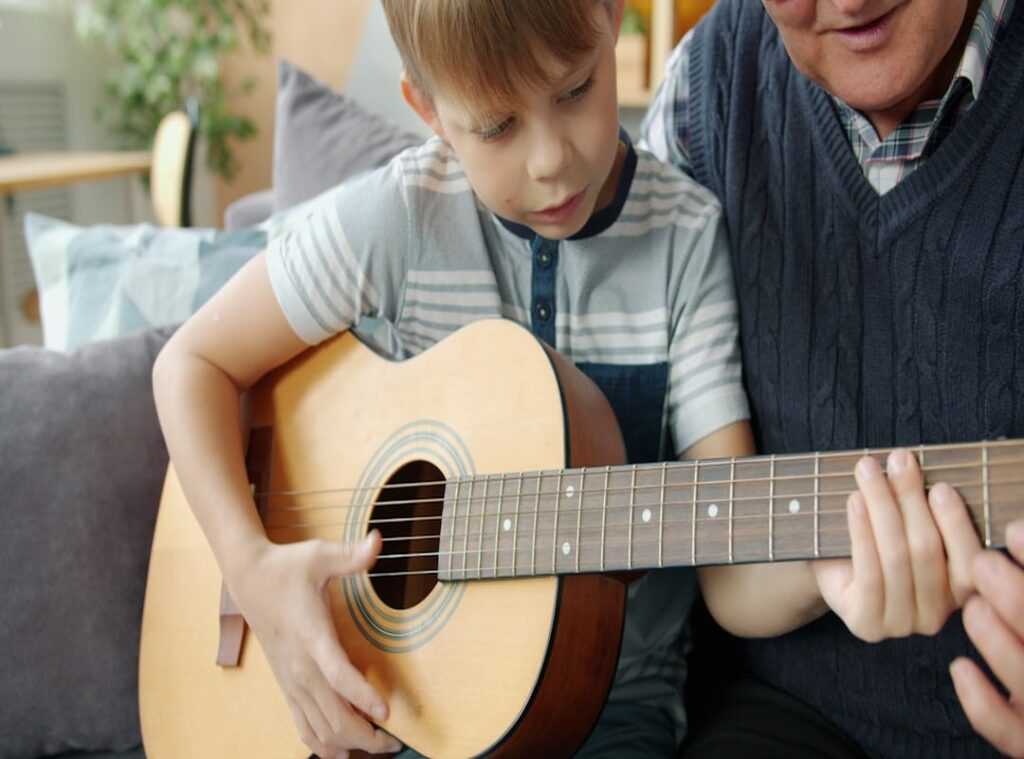
Kids and music have a connection that many parents might overlook. Have you ever wondered if music really impacts a child’s growth or is it just noise? I can assure you, music does play a significant role in music child development.
I’ve seen it firsthand (as have many experts) where music becomes a tool for learning and emotional development. Think about it: those nursery rhymes aren’t just catchy tunes. They’re building blocks for language and cognitive skills.
You don’t need to be a scientist to see how a simple melody can soothe a cranky toddler or ignite a burst of joy.
But there’s more to it than just calming tantrums. Music can sharpen memory, boost concentration, and even boost creativity. It’s like an invisible teacher working through rhythm and rhyme.
In this article, we’ll dive into how integrating music into your child’s routine can build their development. You’ll leave with practical takeaways and the confidence to harmonize music with parenting.
The Science Behind the Symphony: How Music Builds a Better Brain
Neuroplasticity. It’s a fancy term for the brain’s ability to change and adapt. When kids engage with music, it’s like a full-brain workout.
Every note and rhythm stimulates different brain areas, strengthening connections. Think of it like giving your child’s brain a gym membership.
Music child development isn’t just about making little Mozarts. It’s about how music and language intertwine. Songs are packed with rhythm, rhyme, and repetition.
These elements boost phonological awareness, a key pre-reading skill. Ever notice how kids remember song lyrics before they can read? That’s the magic of melody helping encode information.
Let’s talk memory and learning. Remember how you learned the ABCs? Through song, right?
Melody serves as a solid tool for encoding information. It’s no accident. This method taps into the brain’s natural affinity for patterns and repetition.
Music also enhances executive functions. Simple acts, like clapping to a beat or waiting for a cue, build focus, self-control, and working memory. These are the skills that help in school and beyond.
It’s not about creating geniuses. It’s about providing rich sensory experiences that support cognitive growth.
Curious about how this ties into broader cognitive development? You might wonder why kids ask why cognitive development. It’s all connected.
So, don’t stress about turning your child into the next musical prodigy. Instead, enjoy the journey. Sing together.
Clap along. Music is more than entertainment. It’s a tool for growth, one note at a time.
More Than a Melody: Music’s Role in Child Development
Music is more than just sound. It’s a magic bullet for helping kids grow emotionally and socially. Ever noticed how a lullaby can soothe a fussy baby?
That’s because music has the power to match or shift moods. Need your child to calm down? Play something soft.
If they’re bouncing off the walls, a lively tune can channel that energy. Music is like this invisible thread that connects emotions with actions.
Now, picture this: a tiny tot dancing to their favorite song. They’re not just moving their body; they’re expressing joy, frustration, or even sadness. Before kids have the words, they have their bodies.
And music is an outlet for all those tangled feelings. It’s like giving them a voice before they have one. It’s raw, and it’s solid.
But music isn’t just about individual expression. It’s about group dynamics too. Think about a toddler music class (chaotic but delightful, right?).
Kids learn the ropes of turn-taking, listening, and cooperation. These aren’t just skills for now but for life. Sharing musical experiences teaches kids how to be human.
They learn to listen not just with their ears, but with their hearts.
And let’s talk about bonding. There’s something tender about singing a lullaby. It’s intimate.
It’s about connection. Those silly dance parties you have with your kid? They’re golden moments that strengthen bonds and create memories you’ll both cherish.
Music’s intimacy is about being in the moment together, heart to heart.
For more takeaways, check out music in child development. It’s amazing how something as simple as music can have such a deep impact. Music isn’t just a tool; it’s a bridge.
It’s a bridge between emotions, between people. It’s about growth and connection in ways words alone can’t capture.### We might not always get it right, but with music, we’re definitely closer.
Getting in Tune: Practical Ways to Weave Music into Your Day
Music is more than just sounds. It’s a lifeline for child development, and I can’t stress enough how integrating music into daily life can shape a child’s world.
Let’s start with infants. For those tiny humans, simplicity is key. Singing lullabies or even talking to them in a sing-song voice during diaper changes or bath time can work wonders.
You might think, “Does this really matter?” Absolutely. Babies are drawn to rhythm and melody. Try using simple shakers or bells.
They love the sensory exploration. It’s a foundational experience, a first step into music’s vast universe.
Now, let’s talk about toddlers. This age is all about movement and participation. Have you tried action songs like “Head, Shoulders, Knees, and Toes”?
They’re not just catchy; they get kids moving and thinking. Those kitchen utensils (pots, pans, wooden spoons) are perfect for a first drum kit. I mean, who needs a fancy drum when you’ve got a pot?
Dance parties, too, are a hit. Different tempos get them grooving, and it’s pure joy to watch.
Preschoolers? They’re ready for a bit more depth. Introduce them to basic musical concepts like loud and soft, fast and slow.
Make it a game. Encourage them to make up their own lyrics to familiar tunes. It’s playful and creative.
Simple instruments like a xylophone or keyboard can spark interest without the need for formal lessons. Trust me, it’s about exploration, not perfection.
Parents often worry about getting it right. Here’s my take: formal lessons aren’t necessary at this stage. Kids learn best through play.
Music’s beauty lies in its ability to connect and inspire, not in structured classes. If you’re curious about how music and imaginary play intertwine, check out science childrens imaginary friends. It delves into the magic of a child’s mind.
Incorporating music into daily routines isn’t just fun. It’s key for a child’s growth. It’s not about turning them into the next Beethoven.
It’s about nurturing their creativity and joy. So grab that pot, sing that song, and let music be a part of your child’s world. After all, it’s one of the most natural ways to learn and grow together.
The Rhythm of Movement: Music’s Role in Child Development
You ever watch a child dance to music? It’s like watching pure joy in motion. Music and movement go hand in hand, shaping gross motor skills.
When kids dance, they learn balance, coordination, and spatial awareness. It’s not just fun (it’s) foundational.
Now, think about the fine motor skills. Simple instruments, like tapping a drum or pressing piano keys, are key. These activities strengthen hand-eye coordination and finger dexterity.
Kids might think they’re just making noise, but they’re building skills that last a lifetime.
And there’s more. Music helps with body awareness, also known as proprioception. As children move to a beat, they learn to control their bodies in space.
They understand where they are and how to adjust. It’s amazing how something so enjoyable can do so much.
So, next time you’re thinking about how to boost your child’s development, remember the power of music. It’s more than entertainment (it’s) important.
Start Playing with Music Today
Feeling lost on where to start with your child’s growth? You’re not alone. You want the best for them, but it feels like too much.
You don’t have to be a musician to tap into the magic of music child development. It’s in the everyday, simple things. Like a song during cleanup or a quick dance in the living room.
These little moments make a big difference. So, pick one activity from this guide and try it out this week. Watch how these notes create connections.
Ready to see the magic unfold? Start now and feel the joy.

 Norvain Vornhaven writes the kind of child development insights content that people actually send to each other. Not because it's flashy or controversial, but because it's the sort of thing where you read it and immediately think of three people who need to see it. Norvain has a talent for identifying the questions that a lot of people have but haven't quite figured out how to articulate yet — and then answering them properly.
They covers a lot of ground: Child Development Insights, Real-World Parenting Tips, Momlife Wellness Practices, and plenty of adjacent territory that doesn't always get treated with the same seriousness. The consistency across all of it is a certain kind of respect for the reader. Norvain doesn't assume people are stupid, and they doesn't assume they know everything either. They writes for someone who is genuinely trying to figure something out — because that's usually who's actually reading. That assumption shapes everything from how they structures an explanation to how much background they includes before getting to the point.
Beyond the practical stuff, there's something in Norvain's writing that reflects a real investment in the subject — not performed enthusiasm, but the kind of sustained interest that produces insight over time. They has been paying attention to child development insights long enough that they notices things a more casual observer would miss. That depth shows up in the work in ways that are hard to fake.
Norvain Vornhaven writes the kind of child development insights content that people actually send to each other. Not because it's flashy or controversial, but because it's the sort of thing where you read it and immediately think of three people who need to see it. Norvain has a talent for identifying the questions that a lot of people have but haven't quite figured out how to articulate yet — and then answering them properly.
They covers a lot of ground: Child Development Insights, Real-World Parenting Tips, Momlife Wellness Practices, and plenty of adjacent territory that doesn't always get treated with the same seriousness. The consistency across all of it is a certain kind of respect for the reader. Norvain doesn't assume people are stupid, and they doesn't assume they know everything either. They writes for someone who is genuinely trying to figure something out — because that's usually who's actually reading. That assumption shapes everything from how they structures an explanation to how much background they includes before getting to the point.
Beyond the practical stuff, there's something in Norvain's writing that reflects a real investment in the subject — not performed enthusiasm, but the kind of sustained interest that produces insight over time. They has been paying attention to child development insights long enough that they notices things a more casual observer would miss. That depth shows up in the work in ways that are hard to fake.