
If your days feel like a nonstop cycle of school runs, snack requests, missed appointments, and last‑minute scrambles, you’re not alone. Many parents are searching for realistic ways to bring structure and calm back into their homes—and that’s exactly what this guide delivers.
In this article, we’ll walk through practical, easy‑to‑implement kids schedule organization hacks designed to simplify your routines, reduce stress, and help your children thrive with predictable structure. From morning systems that actually work to after‑school flow and bedtime resets, every tip is focused on real-life parenting—not Pinterest perfection.
Our guidance is grounded in proven child development principles and everyday parenting experience, blending research-backed strategies with practical routines that busy moms can stick with. If you’re looking for straightforward solutions that make family life smoother (without adding more to your plate), you’re in the right place.
Bring Calm to the Chaos: Your Guide to Family Routines
From morning scrambles to bedtime battles, managing a child’s day can feel overwhelming. However, predictable routine isn’t about rigid timetables; it’s about creating anchors in day. This guide breaks routines into simple, actionable steps you can tailor to family’s rhythm. Unlike generic advice, we focus on friction points—transitions, sibling conflicts, and after-school crashes—and show how to smooth them. For example, stacking habits (pairing pajamas with storytime) reduces pushback. Additionally, kids schedule organization hacks help you visualize week, cutting decision fatigue. result? Less stress and power struggles, and kids who thrive
Why Predictability Changes Everything
First, fostering security means giving kids a mental roadmap. When a child knows what comes next, their brain conserves energy otherwise spent scanning for surprises. Neuroscience shows predictable routines lower stress hormones like cortisol (APA). In other words, fewer emotional plot twists (and fewer Oscar-worthy meltdowns).
Next, routines build independence. Repeated steps—wake up, dress, pack bag—become automatic scripts. Over time, children internalize responsibility instead of waiting for reminders. That’s the hidden power behind kids schedule organization hacks: they shift ownership from parent to child.
Meanwhile, parents benefit just as much. A set flow reduces decision fatigue—the mental drain caused by constant small choices (Baumeister, 1998). Instead of negotiating bedtime like a hostage treaty, you point to the plan.
Finally, predictable transitions smooth the day. Clear cues between play, dinner, and bath create momentum. Some argue flexibility matters more. True—but structure first makes flexibility possible. Every time.
The 4 Core Anchors of a Rock-Solid Daily Routine
When it comes to family routines, structure beats perfection. Research from the American Academy of Pediatrics shows that consistent daily routines improve children’s emotional regulation, sleep quality, and academic performance. Instead of micromanaging every minute, focus on four anchor points that hold the day together.
Morning Kickstart
First, keep mornings simple and predictable: wake up, potty, get dressed, eat breakfast, brush teeth. That’s it. Studies show predictable morning sequences reduce cortisol (the stress hormone) in young children. Lay out clothes the night before and prep breakfast in advance—using practical kids schedule organization hacks can shave off 10–15 minutes of chaos. If mornings feel rushed, consider reviewing these meal prep strategies for stress free school weeks to reduce decision fatigue.
Midday Reset
Next comes lunch followed by quiet time or a nap. According to the CDC, preschoolers need 10–13 hours of sleep daily, including naps. Even for older kids, 20–30 minutes of quiet time lowers overstimulation and improves afternoon behavior (think of it as a system reboot).
Afternoon Wind-Down
After school, transitions matter. A snack stabilizes blood sugar, which directly impacts mood and focus. Then set clear expectations: homework or a small chore first, followed by free play. This “work before play” model builds executive function skills, backed by Harvard’s Center on the Developing Child.
Bedtime Ritual
Finally, keep bedtime predictable: bath, pajamas, story, cuddle, lights out. Repetition signals safety. Consistency trains the brain to release melatonin at the right time—no dramatic bedtime negotiations required (most nights, anyway).
5 Practical Tips to Make Your New Routine Stick
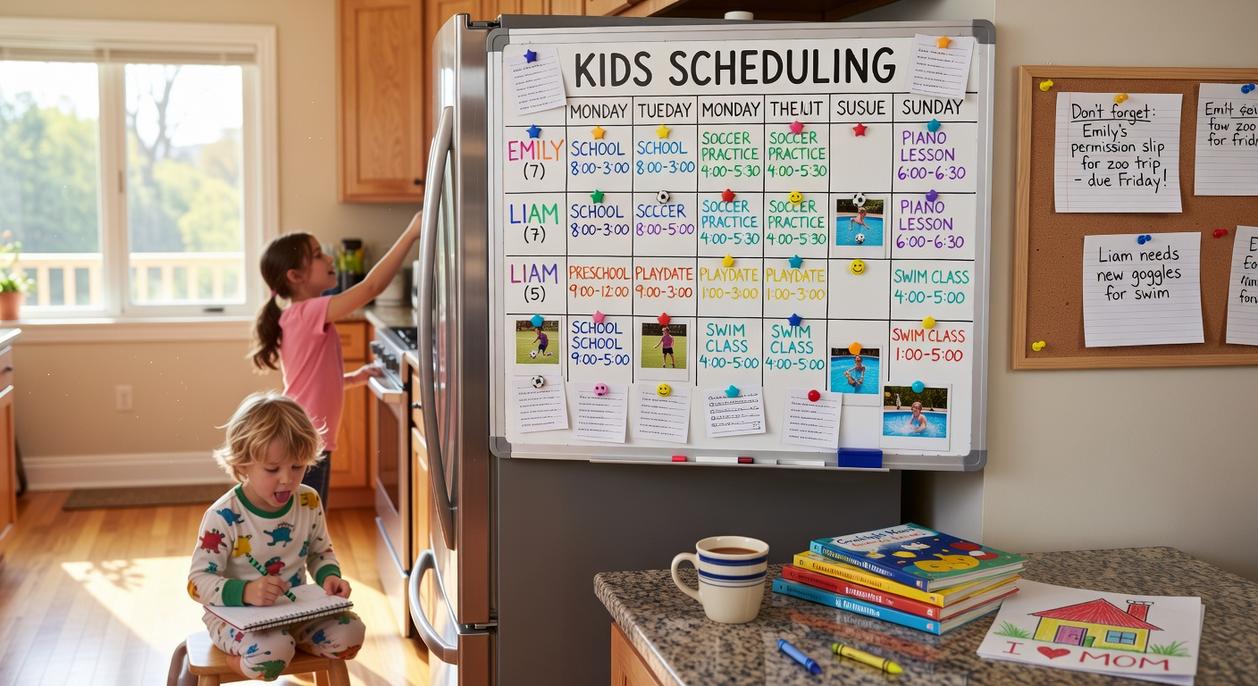
Let’s be honest: starting a new routine feels amazing on Monday… and completely unrealistic by Thursday. I’ve learned (sometimes the hard way) that routines only work if they’re practical.
Tip 1: Make It Visual
Kids respond better to what they can see than what they’re told five times. For toddlers and preschoolers, try a simple picture chart showing “brush teeth,” “put on pajamas,” and “pick a book.” Older kids? A whiteboard checklist works wonders. Visual cues reduce nagging (and honestly, nobody wants to sound like a broken record).
Tip 2: Involve Your Children
If you build the routine for them, expect pushback. If you build it with them, expect cooperation. Offer structured choices like, “Blue PJs or red PJs?” That small sense of control makes a big difference. It’s the difference between resistance and ownership.
Tip 3: Be Consistent — Not a Robot
In my opinion, aiming for perfection is the fastest way to quit. Shoot for 80% consistency. Life happens. Sick days, birthday parties, late soccer practice — flexibility keeps routines realistic. The goal is stability, not a military boot camp.
Tip 4: Start Small
Don’t overhaul the entire day at once. That’s overwhelming for everyone. Pick one pressure point — bedtime is a great place to start — and master it. Success builds momentum (and confidence).
Tip 5: Prep the Night Before
This is my favorite of all kids schedule organization hacks. Lay out clothes. Pack lunches. Check backpacks. Morning-you will be grateful to night-you. Pro tip: put shoes by the door — it eliminates the mysterious daily shoe hunt.
Routines stick when they feel doable. Keep it simple, stay flexible, and adjust as you learn what actually works for your family.
Troubleshooting Common Routine Roadblocks
I still remember the morning my toddler screamed “NO!” because I cut his toast the “wrong” way. We were already late. My instinct was to argue. Instead, I took a breath and said, “We leave in 5 minutes.” Timers became my secret weapon. A clear warning plus a calm voice works better than lecturing (even when you’re running on coffee fumes). Consistency is KEY. When kids know you mean what you say, resistance fades.
Managing multiple ages? That’s a different beast. A baby naps, a preschooler negotiates like a tiny lawyer. Focus on shared anchor points—meals and bedtime—then flex around them. That’s where kids schedule organization hacks can be a lifesaver.
And when life derails everything—vacations, illness, holidays—remember this: ROUTINES RESET FAST. Some argue breaks undo progress. I’ve found the opposite. Just restart the next day. No guilt. No drama. Kids adapt quicker than we think.
Calm homes aren’t accidental; they’re built on simple, steady routines. While others chase complex systems, focus on consistency. Even small kids schedule organization hacks create predictability kids crave.
| Time | Anchor |
| Morning | Pack bags |
Choose one moment today, structure it, and watch cooperation grow. Peace begins with one repeatable step forward.
Bring Calm Back to Your Family Routine
You came here looking for realistic ways to manage your child’s busy days without feeling overwhelmed. Now you have practical strategies you can start using immediately — from creating consistent routines to applying kids schedule organization hacks that actually work in real life.
When schedules feel chaotic, stress builds fast. Missed activities, rushed mornings, and constant reminders can leave everyone frustrated. But with the right systems in place, your home can run smoother, your child can feel more secure, and you can finally breathe a little easier.
The next step is simple: choose one or two of these strategies and implement them this week. Start small, stay consistent, and build from there.
If you’re ready to stop feeling overwhelmed and create a calm, organized routine your family can rely on, explore more proven parenting systems and step-by-step guides designed to simplify mom life. Join thousands of moms who are already transforming their daily routines — and start building a schedule that works for you, not against you.

 Calviner Brownder is a passionate parenting writer sharing practical guidance, child development insights, and supportive advice for modern families.